
— Since the 17th century
The Craft of Rajasthani Block Printing.
The block printers of Sanganer have stamped cloth by hand for over three centuries. We work alongside seven of these families — preserving wages, technique, and the slow, deliberate time these textiles deserve.
— The process
From earth to atelier
01
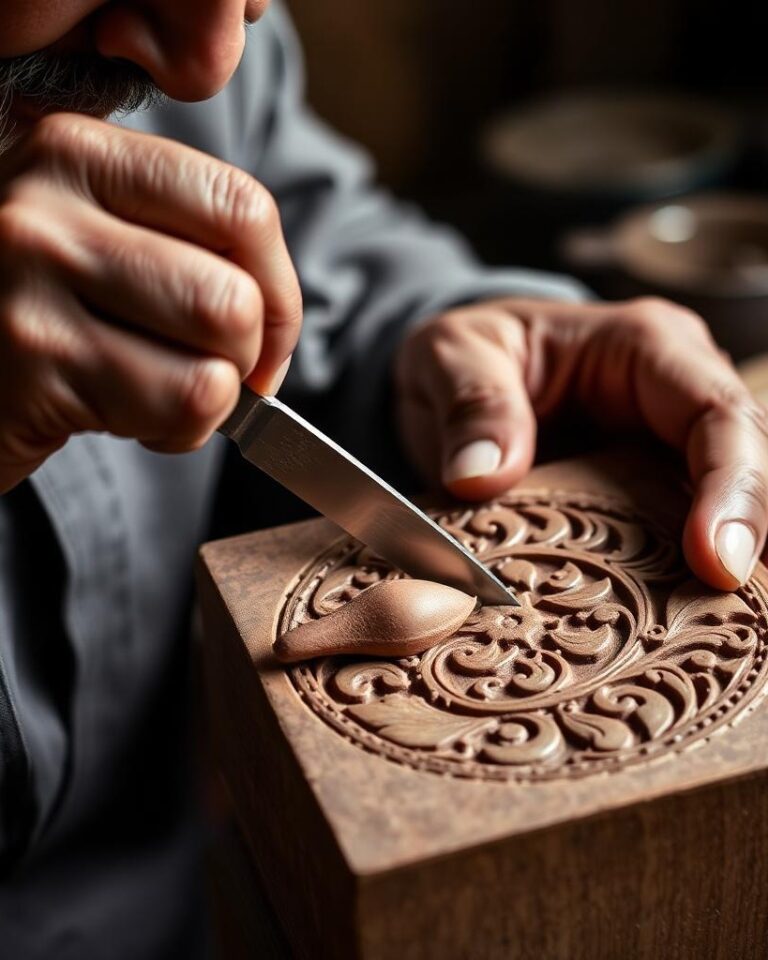
Carving the Block
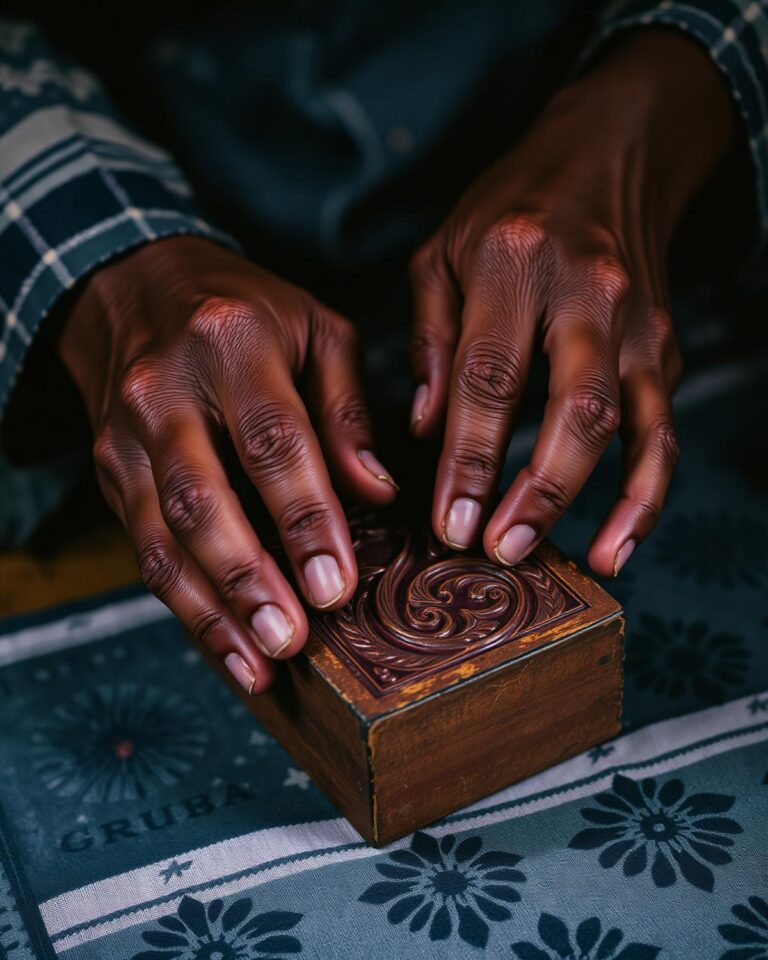
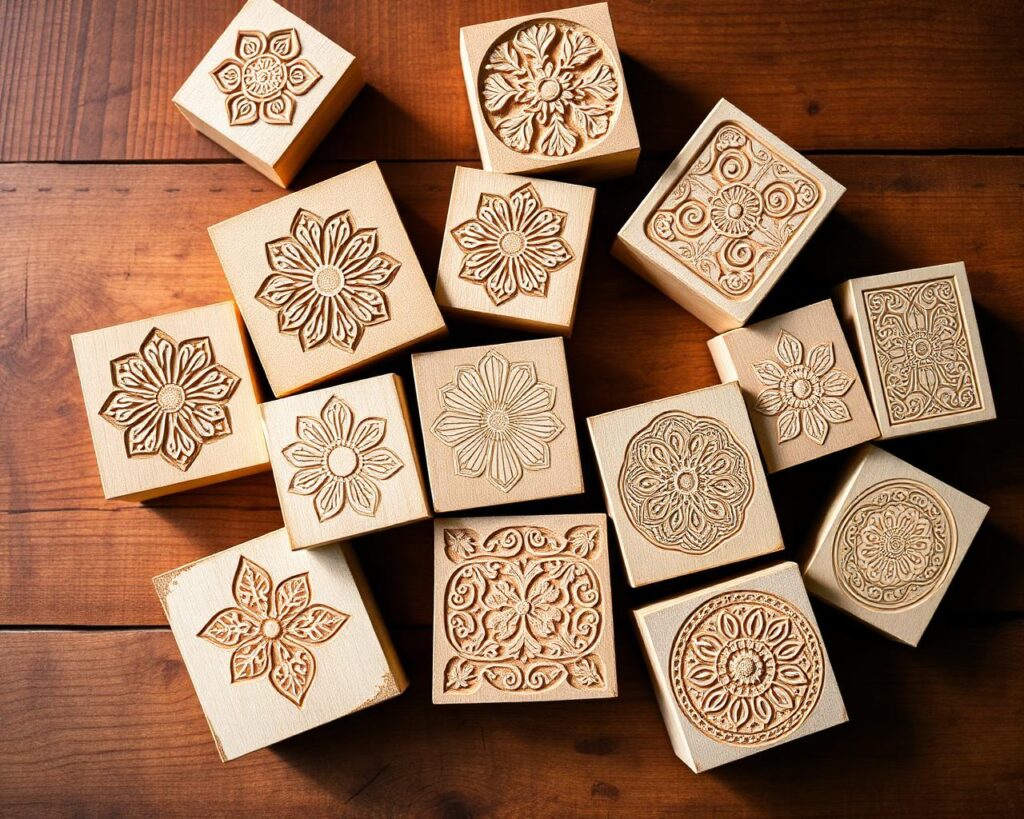
Master carvers chisel motifs into seasoned sheesham wood. A single sari can use over forty blocks.
02
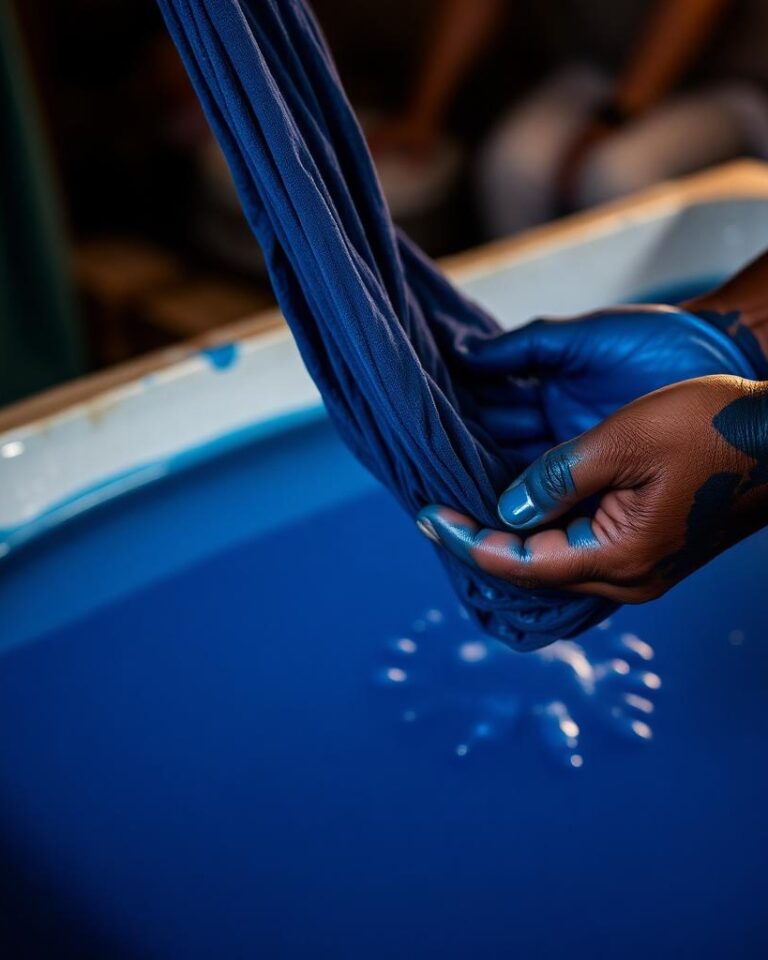
Mixing Natural Dyes
Indigo, madder, pomegranate rind and turmeric — simmered, fermented, aged for depth.
03
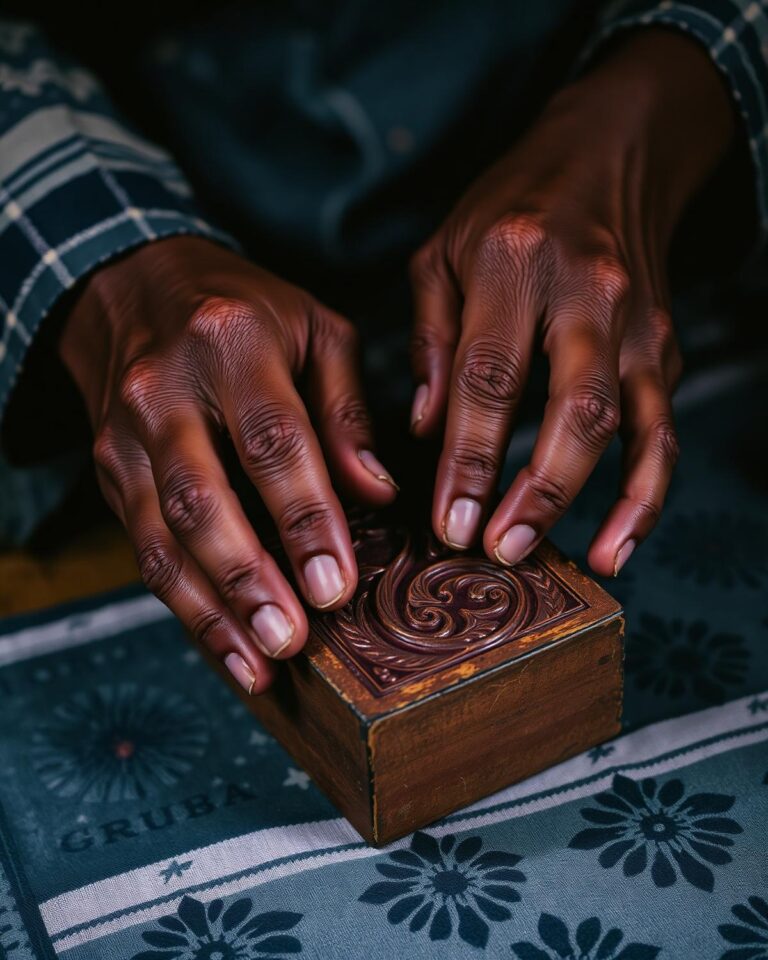
Stamping the Cloth
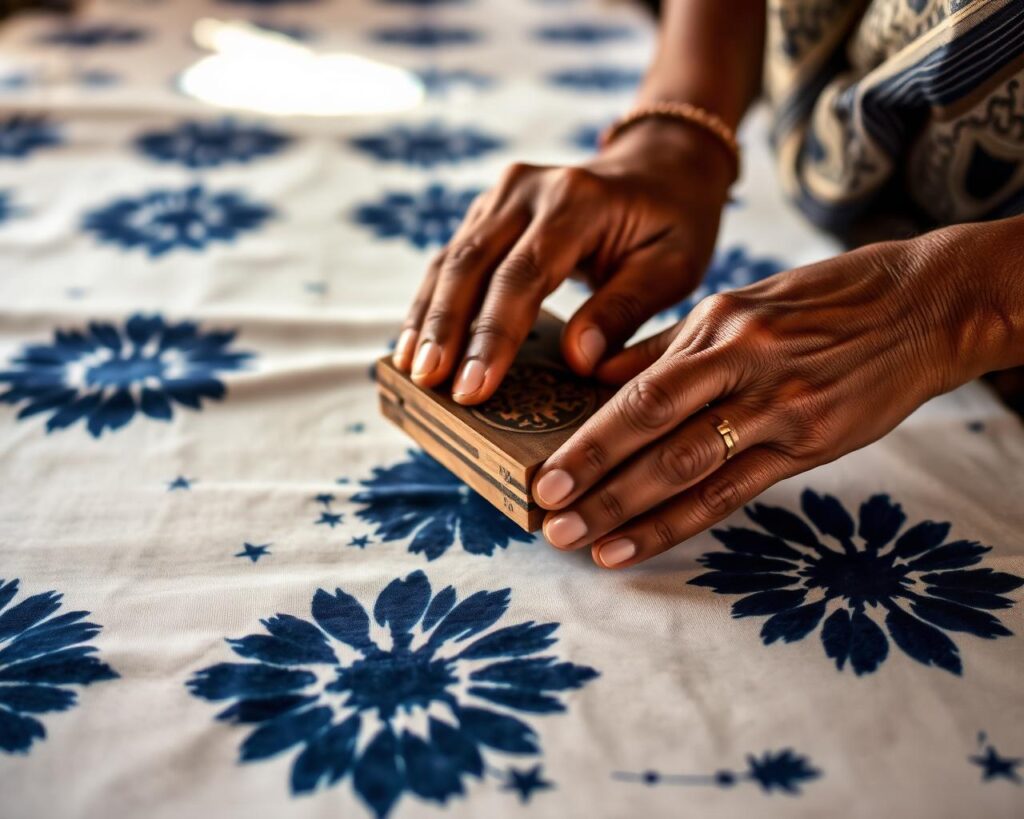
Hands hover, eyes measure. Each stamp lands by feel, not by machine
04
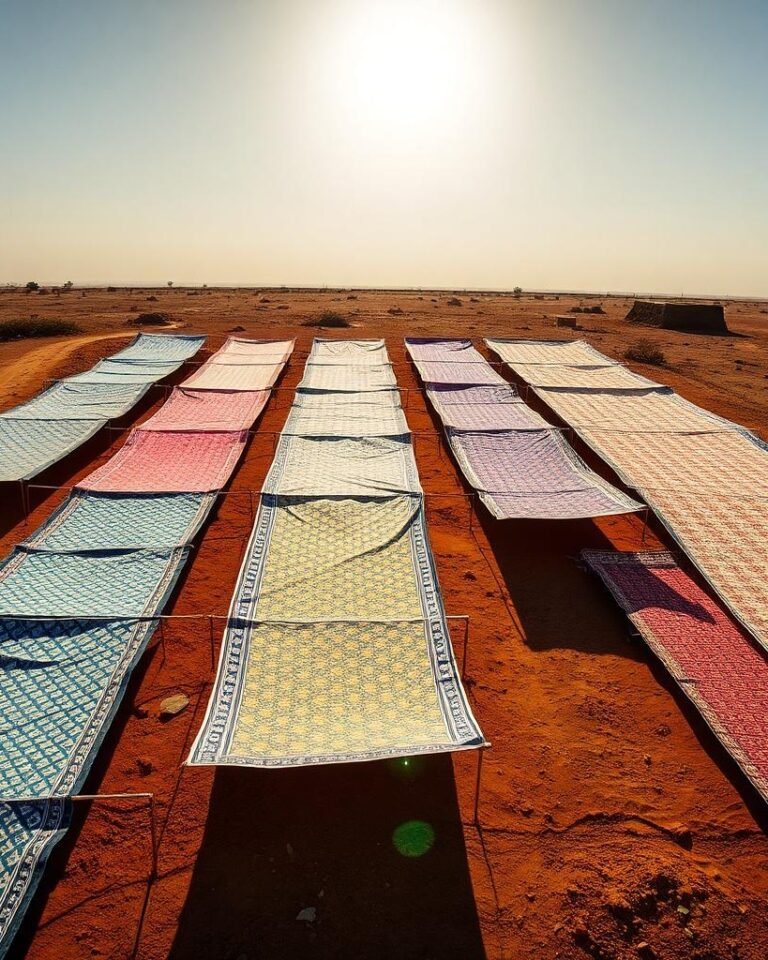
Sun & River
Cloth is washed in well water and dried on the open earth — colours set under desert sun.
— The living crafts
Four traditions,
one workshop.
Sanganer · Rajasthan
Sanganeri Block Print
Fine, delicate florals on white grounds. GI-tagged, dating to the 16th century when Mughal patronage drew Persian motifs into local weaving.
Bagru · Rajasthan
Bagru Dabu Print
Mud-resist printing in iron-black and madder-red. The dabu paste is mixed from clay, gum and wheat — a recipe older than written record.
Bhuj · Kutch
Bandhani Tie-Dye
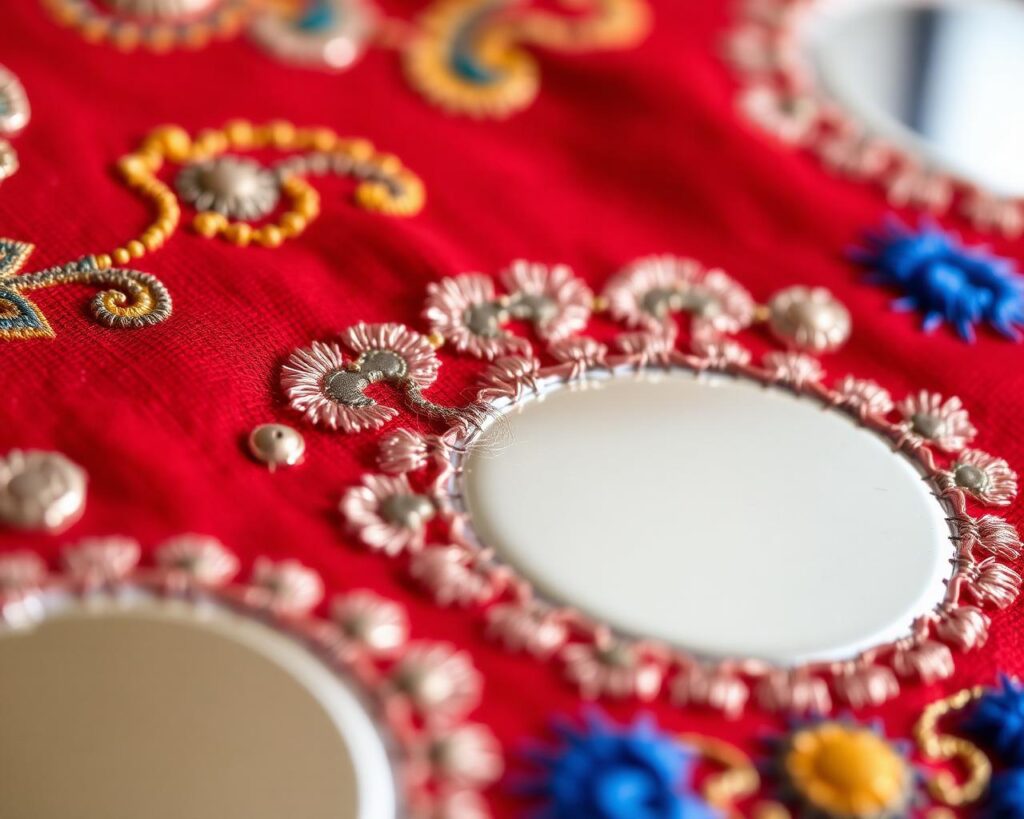
Tens of thousands of tiny knots tied by women’s fingertips before the cloth meets dye. The pattern reveals itself only when the threads are pulled.
West Bengal · Adopted in Rajasthan
Kantha Running Stitch
Layered cotton quilted with running stitches. Originally a way of repurposing worn saris — now an art in its own right.
— The crafts explained
Sanganeri, Bagru & Dabu — the difference.
Sanganeri Block Print
Sanganeri printing takes its name from Sanganer, a village on the outskirts of Jaipur where the craft has been practised since the 16th century. It is defined by fine, delicate florals — buti, jaal and paisley — printed onto a white or off-white cotton ground. The technique earned a Geographical Indication (GI) tag in 2010, protecting its origin the way Champagne protects sparkling wine from that region. Sanganeri fabric is prized by boutique labels for its lightness and the almost drawn quality of its motifs.
Bagru Block Print
Twenty miles from Sanganer, the village of Bagru works in bolder motifs and a distinctly earthy palette: iron-black (syahi) and madder-red (begar) on beige, cream or dun grounds. The colours come from fermented iron filings and madder root respectively — no synthetic pigment enters the workshop. Bagru also carries a GI tag and is favoured by interior brands looking for rustic, hand-finished textiles.
Dabu Mud-Resist Printing
Dabu is the oldest resist-printing technique still in daily use in India. A paste of clay, gum, wheat and lime is stamped onto the cloth; when the fabric is then dipped in an indigo vat, the paste blocks the dye — revealing a luminous pattern in negative space once the mud is rinsed off. Every metre passes through the vat two, three, sometimes four times to build the deep midnight blue Dabu is known for.
— A short history
Three centuries of Rajasthani printing.
Every length of cloth carries
a hand, a name, a village